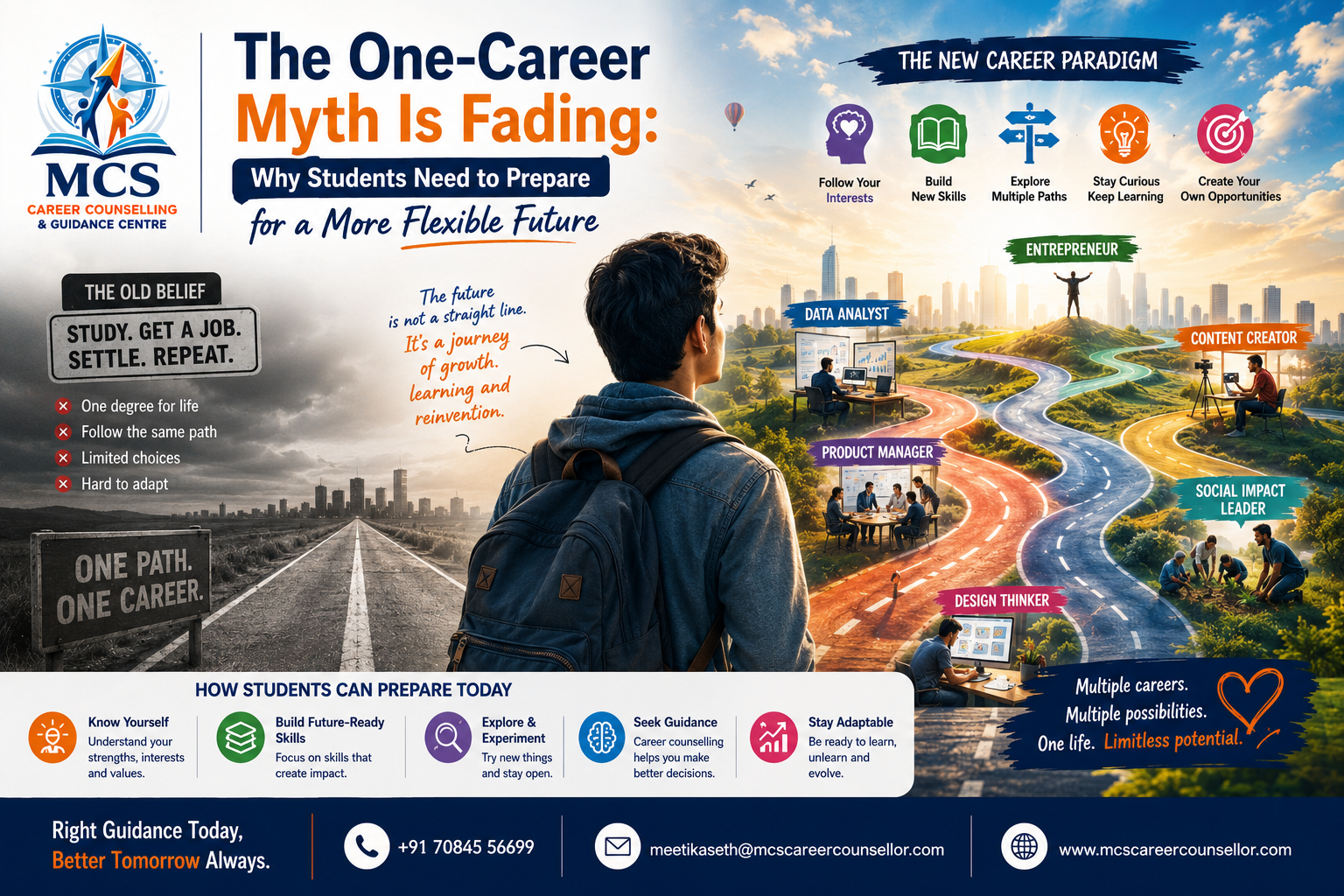
For a long time, career planning followed a simple formula. Choose a stream. Complete a degree. Get a job. Build a career in the same field for the next 30 years.
For many students and parents, this is still how career success is imagined. But the world of work has changed.
Today, it is becoming increasingly common for people to explore different roles, learn new skills, switch industries, and even build more than one career during their lifetime. What once seemed unusual is now becoming a normal part of professional growth.
This doesn't mean students should stop planning their future. It simply means career planning needs to become more flexible.
Why Careers Are Changing Faster Than Before
One of the biggest reasons is the pace of change.
Technology is transforming industries, new job roles are emerging, and businesses are looking for skills that didn't exist a decade ago.
Think about careers such as:
- AI Specialist
- Data Analyst
- UX Designer
- Digital Marketing Strategist
- Cybersecurity Professional
- Content Creator
- Sustainability Consultant
Many of these roles were either rare or completely unknown a few years ago. As industries evolve, professionals are expected to keep learning and adapting throughout their careers.
Students Are No Longer Choosing Just One Destination
A common question students ask during counselling sessions is:
"What should I become?"
The better question today may be:
"What skills should I build?"
Because careers are no longer straight lines. A student might start in engineering and later move into management. Someone studying psychology may eventually work in human resources, coaching, or organizational development. A commerce student may become an entrepreneur, digital marketer, or financial consultant. The path is often far more dynamic than students imagine.
The Most Successful Professionals Keep Learning
One thing we consistently observe is that successful professionals rarely stop learning after college. They upgrade their skills. They earn certifications. They adapt to industry changes. And they stay curious.
In today's job market, continuous learning is becoming just as important as academic qualifications. Students who develop a learning mindset often find it easier to navigate career changes and emerging opportunities.
What Does This Mean for Students?
It means choosing a stream or degree is important, but it does not define your entire future. Many students worry that one wrong decision will permanently damage their career prospects. In reality, careers are often shaped by:
- skills,
- experience,
- adaptability,
- communication,
- problem-solving abilities,
- and continuous learning.
The choices students make today matter, but they are not the final ones. You can change your career by upgrading your skills.
Why Self-Awareness Matters More Than Ever
If careers are becoming more flexible, understanding yourself becomes even more important. Students who know their strengths, interests, personality traits, and natural abilities are often better equipped to adapt when opportunities change.
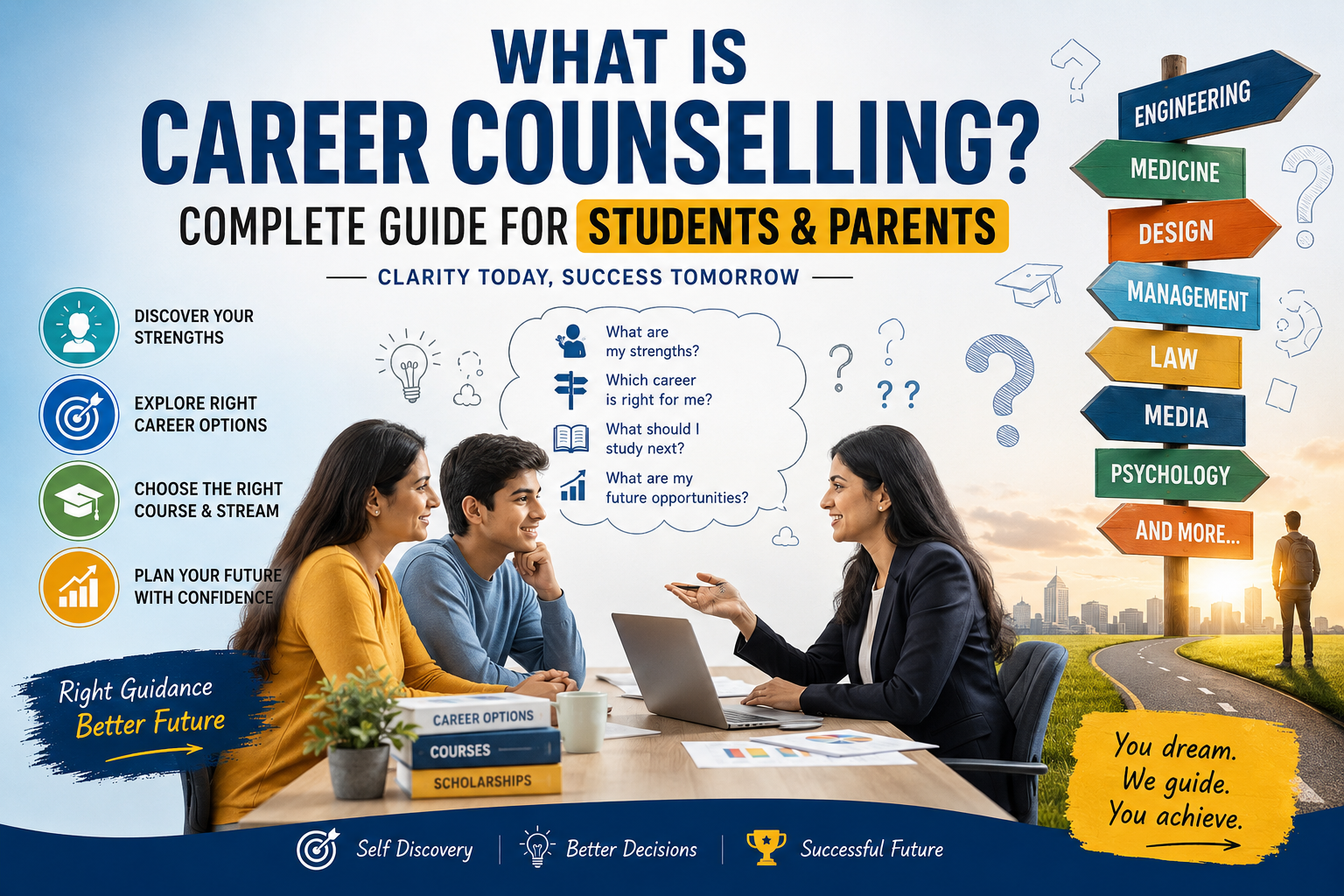
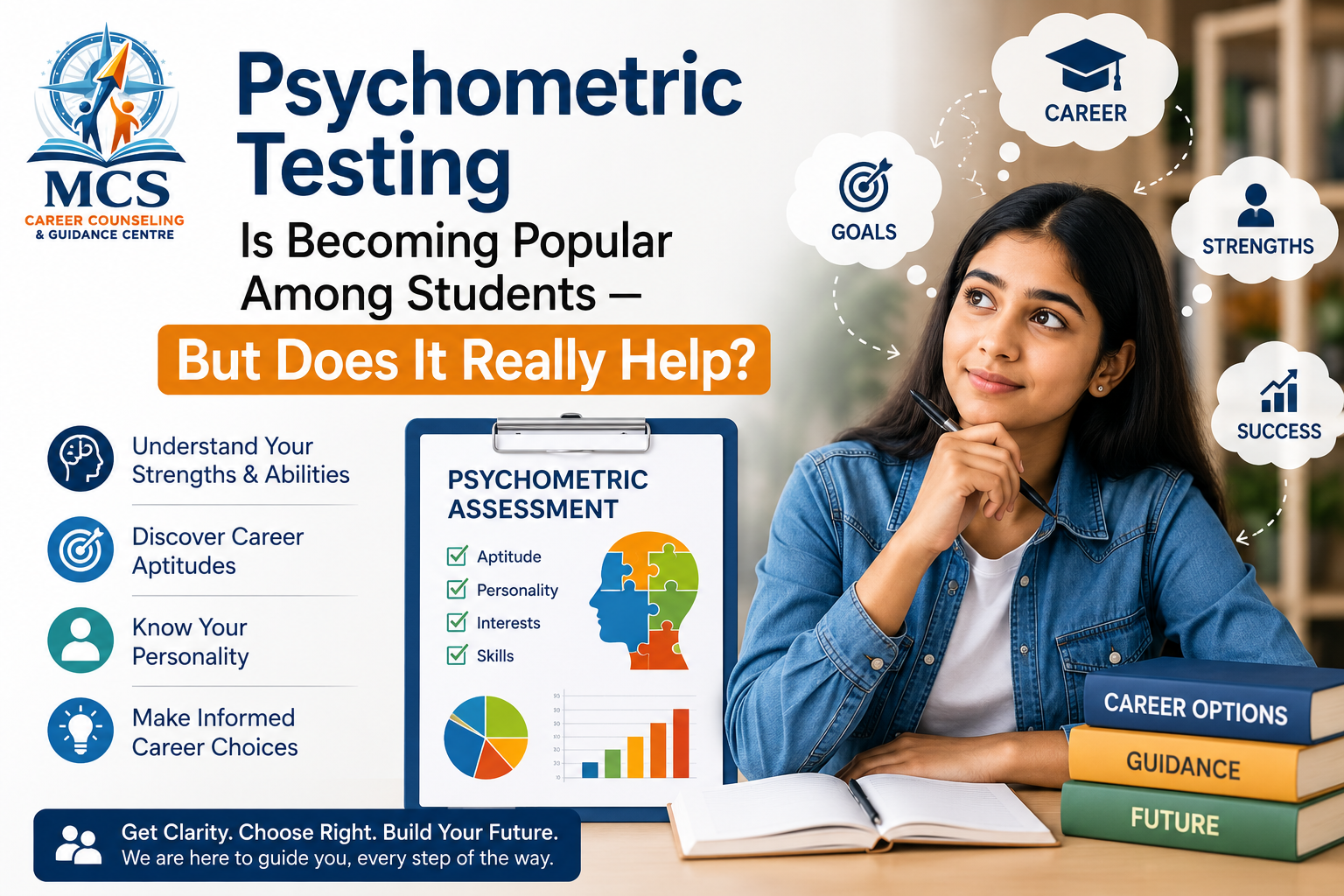
This is one reason why career counselling and psychometric assessments are becoming increasingly valuable. Instead of focusing only on job titles, they help students understand how they are naturally wired to learn, work, and grow. That understanding remains useful even when industries evolve.
The Role of Career Counselling in a Changing World
Career counselling today is not just about recommending a profession. It is about helping students:
- understand themselves,
- explore opportunities,
- identify strengths,
- make informed academic decisions,
- and build confidence in their future choices.
The goal is not to predict every step of a student's career. The goal is to prepare them to make better decisions for their future.
A New Way to Think About Career Success
Perhaps the biggest shift students need to make is this: Success is no longer about choosing one career and never changing.
Success is about building skills, staying adaptable, and continuing to grow. The professionals who thrive are often the ones who are willing to learn, evolve, and embrace new opportunities rather than fear them.
Final Thoughts
The future belongs to students who are prepared to adapt. That doesn't mean changing careers every few years. It means developing the confidence and skills to grow when opportunities arise.
The world of work will continue to evolve. New industries will emerge. Existing roles will transform. Skills will become more valuable than ever. Students who understand themselves, stay curious, and keep learning will always have an advantage. Because the future isn't about preparing for one job. It's about preparing for a lifetime of opportunities.